How Much Fiber Per Day? Portions That Add Up to 25 g
By CalorTracker Team8 min read
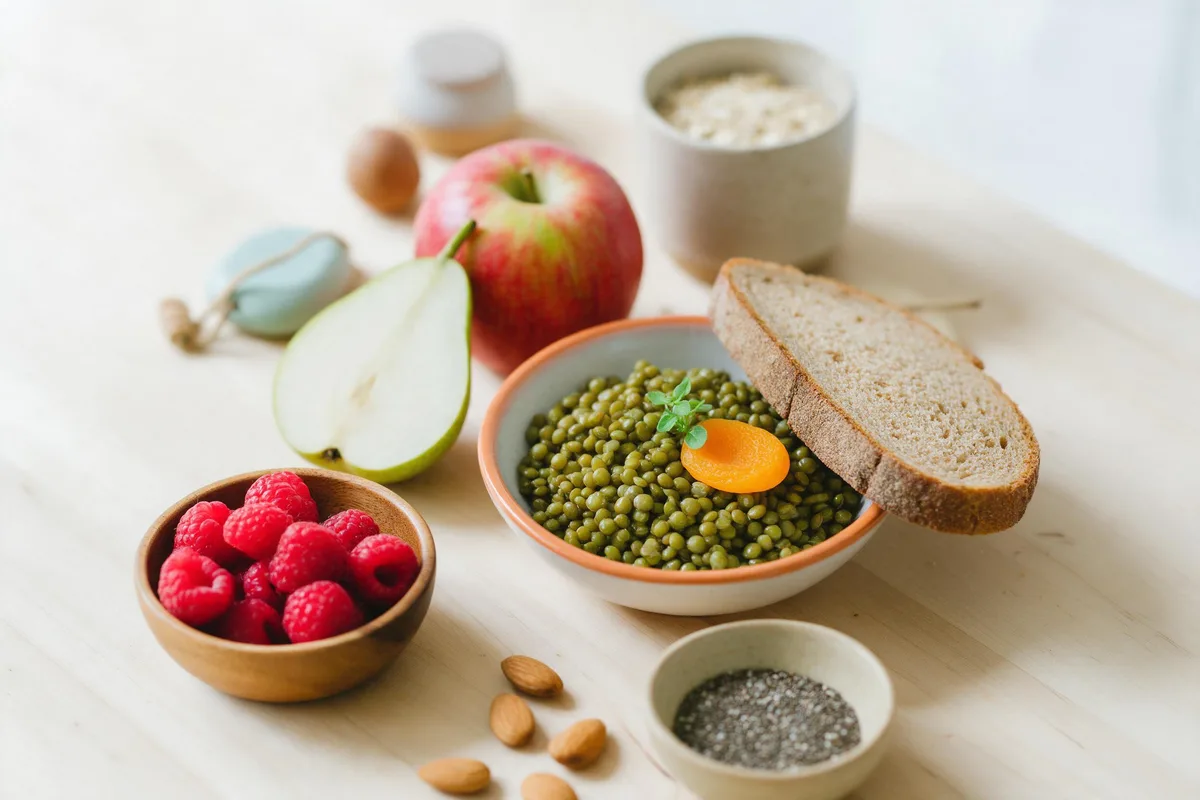
Fiber is the nutrient most people know they should eat more of and few can say how much. It is also the one that is hardest to judge by eye: a food that sounds like a fiber food can deliver very little in the amount you actually eat.
This post gives you a number to aim at, then does the part most lists skip. It converts fiber from "grams per 100 g" into grams per portion you would really eat, with the calories next to it, so you can see what a day of 25 g looks like on a plate.
How much fiber per day
The World Health Organization's healthy diet fact sheet tells adults to aim for a daily intake of at least 25 grams of naturally-occurring dietary fibre. That is a general guideline for adults, not advice tailored to you. Anyone with a medical reason to eat a particular way, including a condition that affects digestion, should plan fiber with their clinician instead.
Two practical notes on that figure:
- It is a floor, not a target to hit exactly. The wording is "at least". Being at 22 g one day and 30 g the next is not a failure.
- "Naturally-occurring" matters for tracking. Most of what you log from whole foods counts. Added-fiber products, such as some bars and drinks, are a separate category, and the label is the only reliable source for them.
Where fiber sits among your macros
Fiber is part of your carbohydrate total, not a fourth macro. If you set targets with the macro calculator, your carbohydrate grams already include whatever fiber you eat, so there is nothing extra to budget. CalorTracker adds up the fiber from every food you log, so you can see the total for the day.
Fiber per portion, not per 100 g
Per 100 g, chia seeds come out far ahead: 34.4 g, against 7.9 g for cooked lentils. Per portion it looks different, because you eat 28 g of chia and a full cup of lentils. The table uses the portion sizes stored with each food (taken from USDA's portion data) and multiplies out: fiber per portion is fiber per 100 g times portion weight divided by 100, and the same for calories. Values come from USDA FoodData Central.
| Food | Portion | Weight | Fiber in portion (g) | kcal in portion | Fiber per 100 kcal (g) |
|---|---|---|---|---|---|
| Lentils | 1 cup | 198 g | 15.6 | 230 | 6.8 |
| Black Beans | 1 cup | 172 g | 15.0 | 227 | 6.6 |
| Avocado | 1 cup, cubes | 150 g | 10.1 | 240 | 4.2 |
| Chia Seeds | 1 oz | 28.35 g | 9.8 | 138 | 7.1 |
| Green Peas (Cooked) | 1 cup | 160 g | 8.8 | 134 | 6.5 |
| Raspberry | 1 cup | 123 g | 8.0 | 64 | 12.5 |
| Barley (Cooked) | 1 cup | 157 g | 6.0 | 193 | 3.1 |
| Pear | 1 medium | 178 g | 5.5 | 101 | 5.4 |
| Whole Wheat Pasta (Cooked) | 1 cup elbows | 117 g | 4.6 | 174 | 2.6 |
| Apple | 1 medium | 182 g | 4.4 | 95 | 4.6 |
| Oatmeal (Cooked) | 1 cup | 234 g | 4.0 | 166 | 2.4 |
| Almonds | 1 oz (23 kernels) | 28.35 g | 3.5 | 164 | 2.2 |
| Banana | 1 medium | 118 g | 3.1 | 105 | 2.9 |
| Broccoli (Cooked) | 0.5 cup, chopped | 78 g | 2.6 | 27 | 9.4 |
| Whole Wheat Bread | 1 slice | 32 g | 1.9 | 81 | 2.4 |
| White Bread | 1 medium slice | 28 g | 0.6 | 75 | 0.9 |
What the table shows
Legumes win by a distance. One cup of cooked lentils or black beans delivers 15 g or more, which is more than half of a 25 g day from a single bowl, for about 230 calories.
Raspberries are the standout fruit. A cup gives 8.0 g for 64 calories, 12.5 g of fiber per 100 kcal, the highest ratio in the table. Pears and apples give 4 to 5.5 g each for around 100 calories. The high-fiber fruits list ranks the rest.
Seeds and nuts are compact but not light. An ounce of chia has 9.8 g for 138 calories, which is excellent, while an ounce of almonds has 3.5 g for 164. Both are worth knowing, and neither is a free addition to a calorie budget.
Small vegetable portions add up slowly. Half a cup of cooked broccoli gives 2.6 g for 27 calories, a good ratio but a small number of grams. Vegetables are how you reach the target cheaply in calories; they rarely get you there alone. See the high-fiber vegetables list and the high-fiber low-calorie foods list.
"Whole" changes the number. A slice of whole wheat bread has 1.9 g, a slice of white bread has 0.6 g, for almost the same calories. The white bread vs whole wheat bread comparison shows it per 100 g, and the same pattern holds for brown rice vs white rice.
Two sample days that reach 25 g
These are arithmetic on the table's portions, not meal plans or recommendations. Each day lists only the foods that supply the fiber; add whatever else you eat.
Day A: no legumes.
| Food | Fiber (g) | kcal |
|---|---|---|
| Cooked oatmeal, 1 cup | 4.0 | 166 |
| Raspberries, 1 cup | 8.0 | 64 |
| Whole wheat bread, 2 slices | 3.8 | 161 |
| Apple, 1 medium | 4.4 | 95 |
| Cooked broccoli, 0.5 cup | 2.6 | 27 |
| Almonds, 1 oz | 3.5 | 164 |
| Total | 26.3 | 677 |
Day B: one bowl of lentils.
| Food | Fiber (g) | kcal |
|---|---|---|
| Lentils, 1 cup | 15.6 | 230 |
| Cooked oatmeal, 1 cup | 4.0 | 166 |
| Apple, 1 medium | 4.4 | 95 |
| Cooked broccoli, 0.5 cup | 2.6 | 27 |
| Total | 26.6 | 518 |
Day B reaches the same fiber with about 160 fewer calories because lentils carry most of the load. That is the practical lesson of the table: the cheapest route to 25 g runs through legumes, berries and vegetables, and the most expensive through nuts and refined grains.
If you are well short of 25 g
Most people can move toward the figure with two or three swaps rather than a new diet: whole wheat instead of white bread, a piece of fruit with the skin on, a spoonful of beans in a soup or salad. Log a few normal days first, and look at the fiber total CalorTracker keeps. That is a more honest starting point than a guess.
If you are tracking protein as well, the same foods do double duty. Lentils and beans appear in our vegetarian protein ranking for the same reason they top this table. For the full ranked list by fiber per 100 g, see foods high in fiber, and for how to set the rest of your targets, how to start tracking macros.
Common questions
Does fiber count in my calories?
The calories for a food already come from its recorded energy value, and fiber is included in the carbohydrate total. Logging the food is enough; there is nothing to add or subtract.
Is cooked or raw fiber different?
Cooking mostly changes weight through water. Per 100 g, cooked lentils show less fiber than dry ones for that reason. Compare cooked with cooked, and use the portion you actually eat, as in the table.
Is the 25 g figure the same everywhere?
No. Different health bodies publish their own reference values, and they differ by country, age and sex. The WHO figure used here is a general adult guideline; check your local authority if you want its specific number.
Where do the numbers come from?
USDA FoodData Central entries, stored with each food page. The per-portion columns are our arithmetic on those values.
Sources
This is general information, not medical advice. If you are pregnant, under 18 or managing a health condition, talk to a doctor or registered dietitian before changing how you eat.
New guides by email, once a month
At the start of each month we send one email listing what is new on CalorTracker: blog posts, food pages and calculators. That is the only email this sign-up sends.
Have a CalorTracker account? If you agreed to email updates when you set it up, this email already comes to you, and signing up here as well still sends it once.
More from the blog
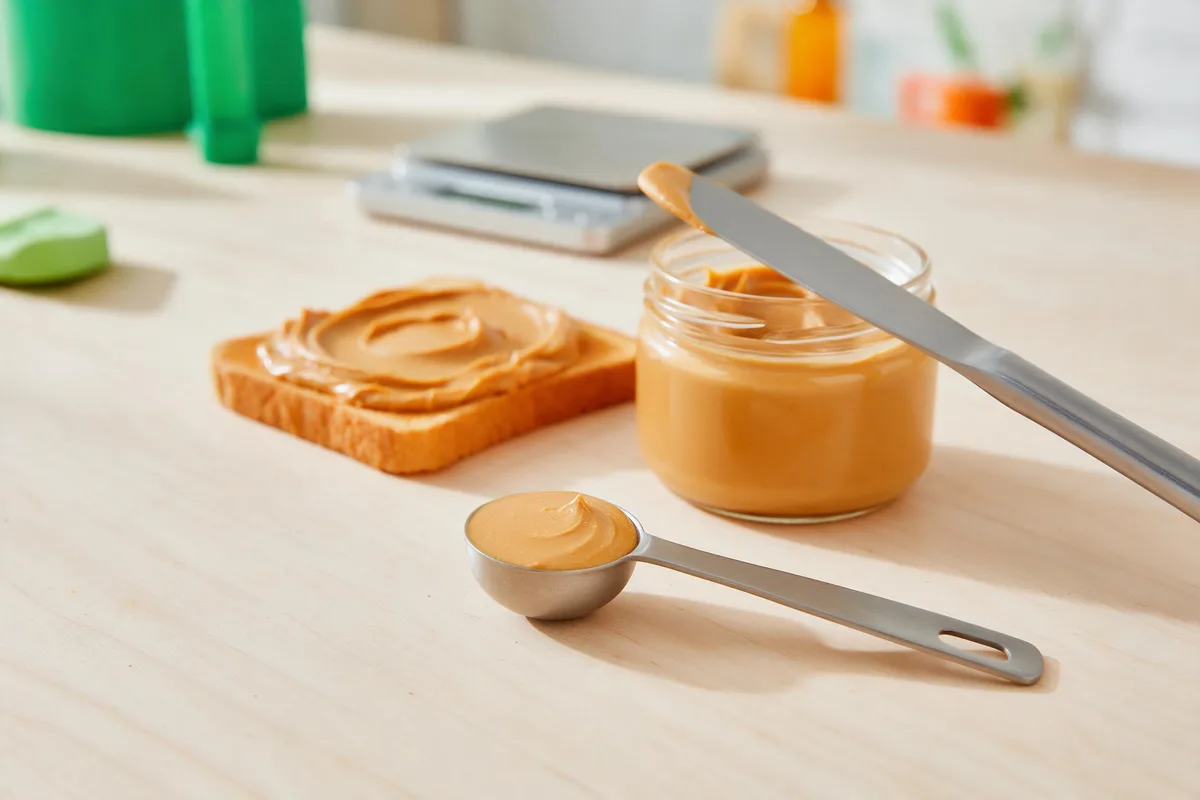 Peanut Butter Calories: Why It Is the Most Under-Logged Food (and How to Fix It)A level tablespoon of peanut butter is about 96 calories; a big spoon can be three times that. The arithmetic and how to log it.CalorTracker Team · 7 min read
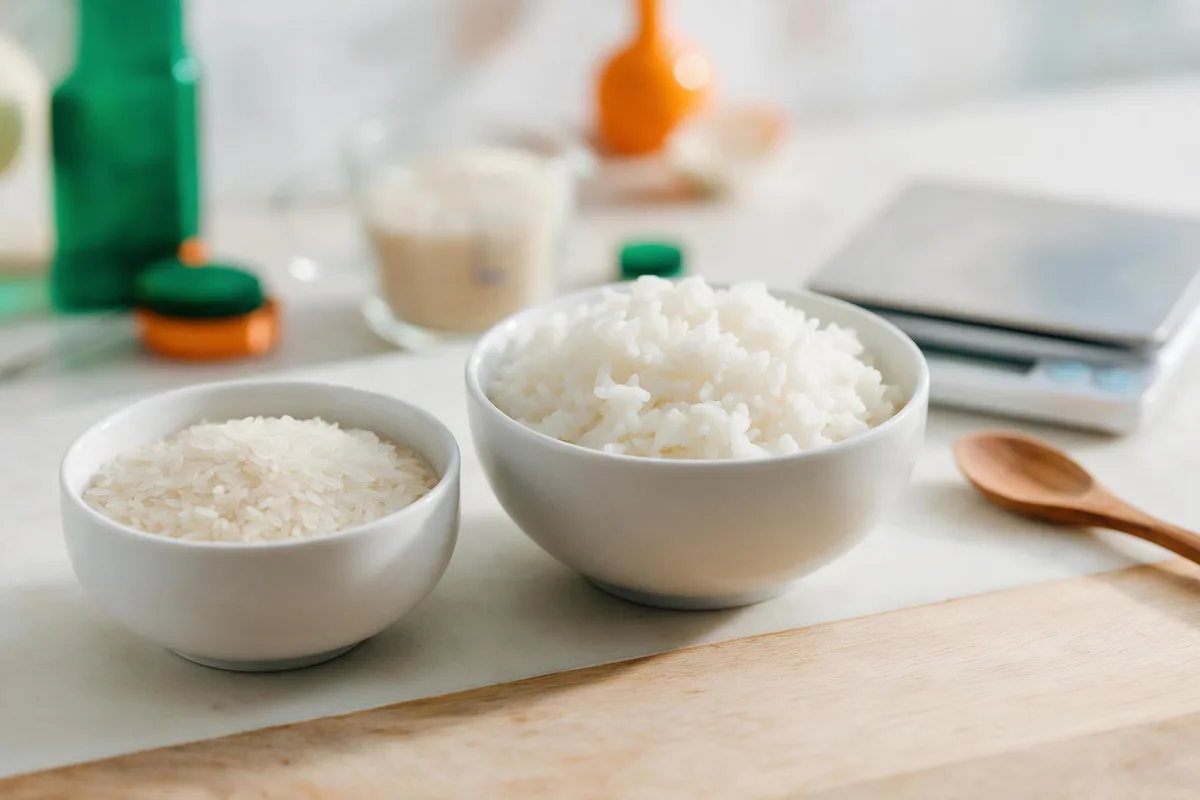 Rice Calories: Cooked vs Uncooked, and the Logging Mistake That Costs Hundreds of CaloriesDry rice has 365 calories per 100 g and cooked rice has 130. Why both are right, how to convert, and how to weigh rice so your log is not out.CalorTracker Team · 8 min read
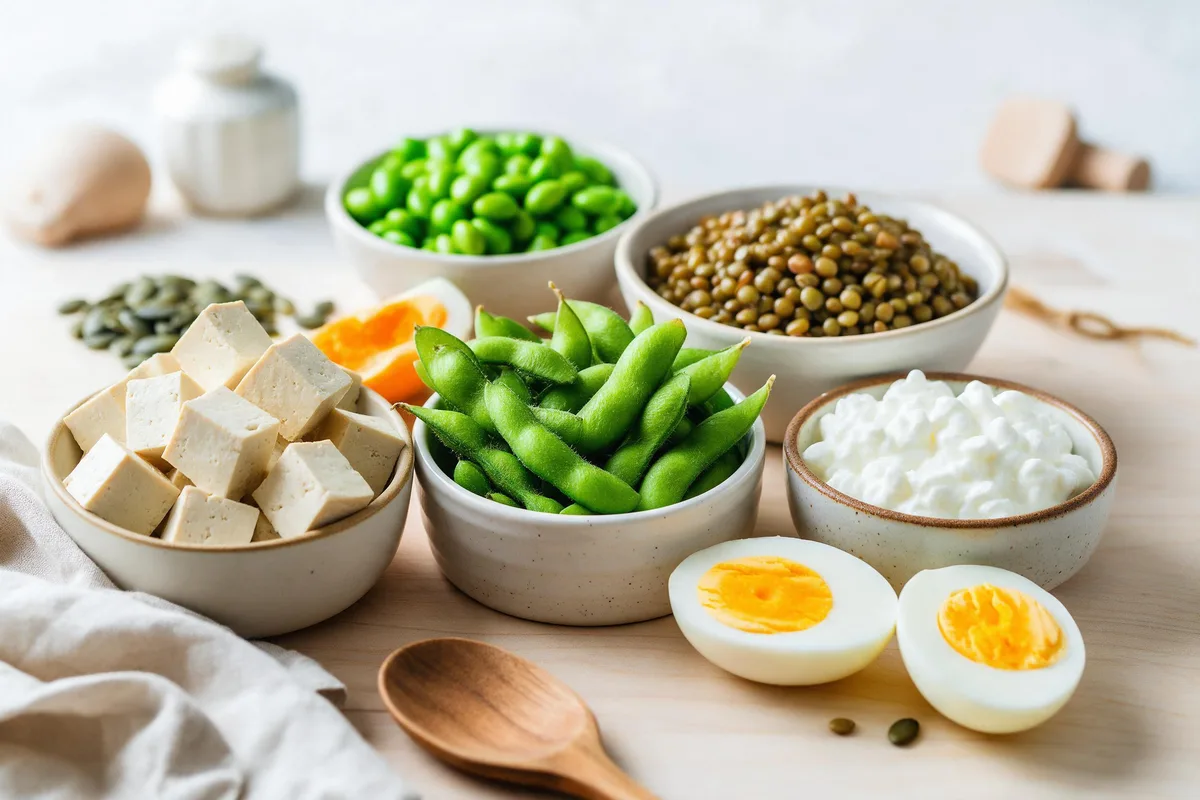 Vegetarian Protein Sources Ranked by Protein per 100 CaloriesFifteen vegetarian protein foods ranked by protein per 100 calories, with the food and calories each needs to reach 20 g of protein, worked out from USDA data.CalorTracker Team · 8 min read
Track what you eat without the typing
Snap a photo, say what you ate or type it, and CalorTracker's AI estimates the calories and macros for you to check. Free to start, no card needed to explore.
Start free on the web