Peanut Butter Calories: Why It Is the Most Under-Logged Food (and How to Fix It)
By CalorTracker Team7 min read
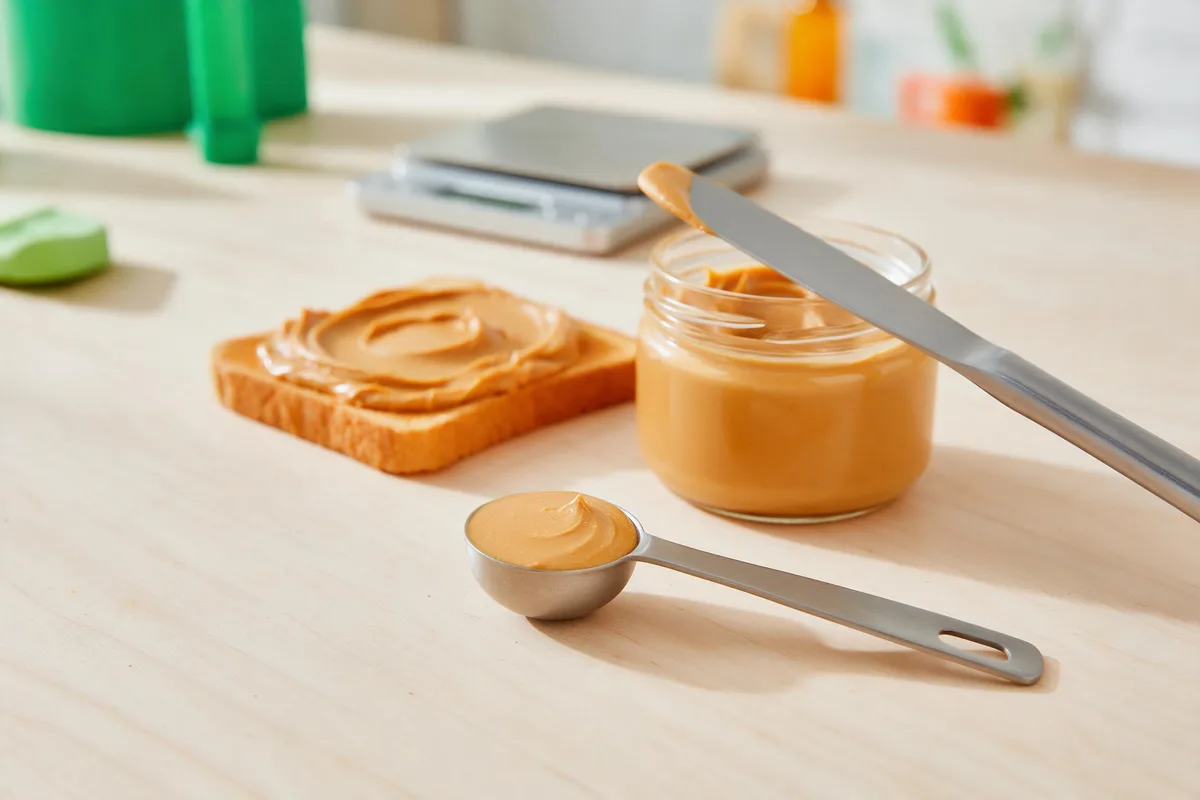
Peanut butter is a food people log by feel. A "spoonful" goes on toast, into oats, onto an apple, or straight from the jar to the mouth, and the entry in the diary says "1 tbsp". The tablespoon in the diary is a tidy, level, measured one. The spoon in your hand rarely is.
That gap matters because peanut butter is dense. This post gives you the numbers, a table of what different spoon sizes are worth, and a simple way to log it that does not turn breakfast into a lab session. All values are from USDA FoodData Central.
What is in peanut butter
The USDA entry for smooth peanut butter with salt gives, per 100 g:
- 598 calories
- 22.2 g protein
- 51.4 g fat
- 22.3 g carbohydrate, of which 5.0 g fibre
Do the sum with the standard 9 calories per gram of fat and about 77% of the calories come from fat. That is not a flaw, it is simply why a small amount carries so many calories. The practical number to remember is about 6 calories per gram.
You can see the full entry on our peanut butter food page.
A tablespoon is a weight, not a spoon
The USDA portion for this entry is 2 tablespoons = 32 g, so one level tablespoon is about 16 g and about 96 calories. Our cups-to-grams converter for peanut butter uses the USDA cup weight (258 g) to arrive at the same 16 g per tablespoon.
The word that matters is level. A spoon heaped from the jar holds more than a level one, and the amount is easy to double without noticing.
The original bit: what different spoons are worth
We cannot tell you how much your spoon holds, because it depends on the spoon, the jar, and how thick the peanut butter is. What we can do is show what each weight is worth, so you can see how fast it climbs. Calculated from the USDA entry (5.98 calories per gram):
| Amount on the spoon | Calories | Protein | Fat | Carbs |
|---|---|---|---|---|
| 10 g (a scrape) | 60 | 2.2 g | 5.1 g | 2.2 g |
| 16 g (one level tablespoon) | 96 | 3.6 g | 8.2 g | 3.6 g |
| 32 g (the USDA serving, 2 tbsp) | 191 | 7.1 g | 16.4 g | 7.1 g |
| 48 g (3 tablespoons) | 287 | 10.7 g | 24.7 g | 10.7 g |
| 64 g (4 tablespoons) | 383 | 14.2 g | 32.9 g | 14.3 g |
Calculated from FDC 174266, smooth style with salt. Natural or reduced-fat peanut butters, and other brands, will differ; check the label on yours.
Now put that in the context of a log. If you log "1 tbsp" (96 calories) and the real spoon was 48 g (287), that is 191 calories missing from one snack. Do it daily and it is 1,340 calories a week that the log never saw. This is the same kind of leak that overcoming diet plateaus walks through when a deficit seems to stall.
The numbers above are weights chosen to show the arithmetic. They are not measurements of any particular spoon.
Peanut butter compared with other spreads and oils
For context, here are single practical portions, taken straight from the USDA entries:
| Portion | Weight | Calories |
|---|---|---|
| Peanut butter, 1 level tbsp | 16 g | 96 |
| Almond butter, 1 tbsp | 16 g | 98 |
| Olive oil, 1 tbsp | 13.5 g | 119 |
| Dry-roasted peanuts, 1 oz | 28.35 g | 166 |
Per tablespoon, peanut butter and almond butter come out close (the almond butter entry is plain, without salt added). Olive oil is denser still, at 884 calories per 100 g. Browse the rest on the nuts and seeds and fats and oils category pages.
How to log peanut butter without the ritual
Three options, from most accurate to least effort:
- Weigh it. Put the plate or bowl on a scale, press tare, add the peanut butter, log the grams. Ten seconds, and it is right every time. For anything that goes on food, weigh the peanut butter after you have added it, so you are not guessing the amount that stuck to the knife.
- Weigh the jar. For a jar that lasts a week, weigh it on Monday and again on Sunday. The difference is what you ate. If it is more than you logged, your spoons are bigger than you think.
- Make the tablespoon honest. Use a real measuring spoon once, level it with a knife, and look at it. That is what 96 calories looks like. Then compare it with what you normally scoop.
If you use the app, a photo of the toast or oats counts too. The AI food scanner will estimate the spread as part of the plate, and you can correct the weight if you know it. How accurate AI calorie counting is explains what to expect from an estimate and when to override it.
Peanut butter and your protein target
At 22 g of protein per 100 g, a 32 g serving gives about 7 g of protein for 191 calories. That is about 3.7 g of protein per 100 calories. For comparison, our raw chicken breast entry works out at about 18.8 g per 100 calories, so peanut butter works as a flavour and fat source more than a protein source. The full ranking is on the high-protein foods list. If protein is your goal, the protein calculator will give you a daily range, and the macro calculator will split the rest.
Common questions
How many calories are in 2 tablespoons of peanut butter?
About 191 calories for the USDA serving of 32 g (smooth, with salt). Brands vary, so check the label if you eat the same one every day.
Is natural peanut butter lower in calories?
We do not have a USDA entry for every kind of natural peanut butter, so we will not give a number. Our food entry is smooth peanut butter with salt; natural versions will differ a little. The label on your jar is the right source.
Does powdered peanut butter count the same?
No. It is a different product with its own nutrition label, so log it as its own food.
Should I stop eating peanut butter if I am counting calories?
That is a personal choice, and nothing here says you should. The point is only that it is a food worth weighing, because the amount on the spoon changes the total quickly.
Which is lower in calories, peanut butter or almond butter?
Per tablespoon in the USDA entries, they are within a couple of calories of each other (96 and 98). The difference between brands is bigger than the difference between the two.
The short version
Peanut butter is about 6 calories per gram, so the question is always how many grams. A level tablespoon is about 96 calories, a generous spoon can be three times that, and a week of that difference is over a thousand calories. Weigh it for a few days, learn what your usual spoon holds, and the rest of the log gets easier to trust.
Ready to log faster? Start tracking free and let the photo do the first pass.
Sources
This is general information, not medical advice. If you are pregnant, under 18 or managing a health condition, talk to a doctor or registered dietitian before changing how you eat.
New guides by email, once a month
At the start of each month we send one email listing what is new on CalorTracker: blog posts, food pages and calculators. That is the only email this sign-up sends.
Have a CalorTracker account? If you agreed to email updates when you set it up, this email already comes to you, and signing up here as well still sends it once.
More from the blog
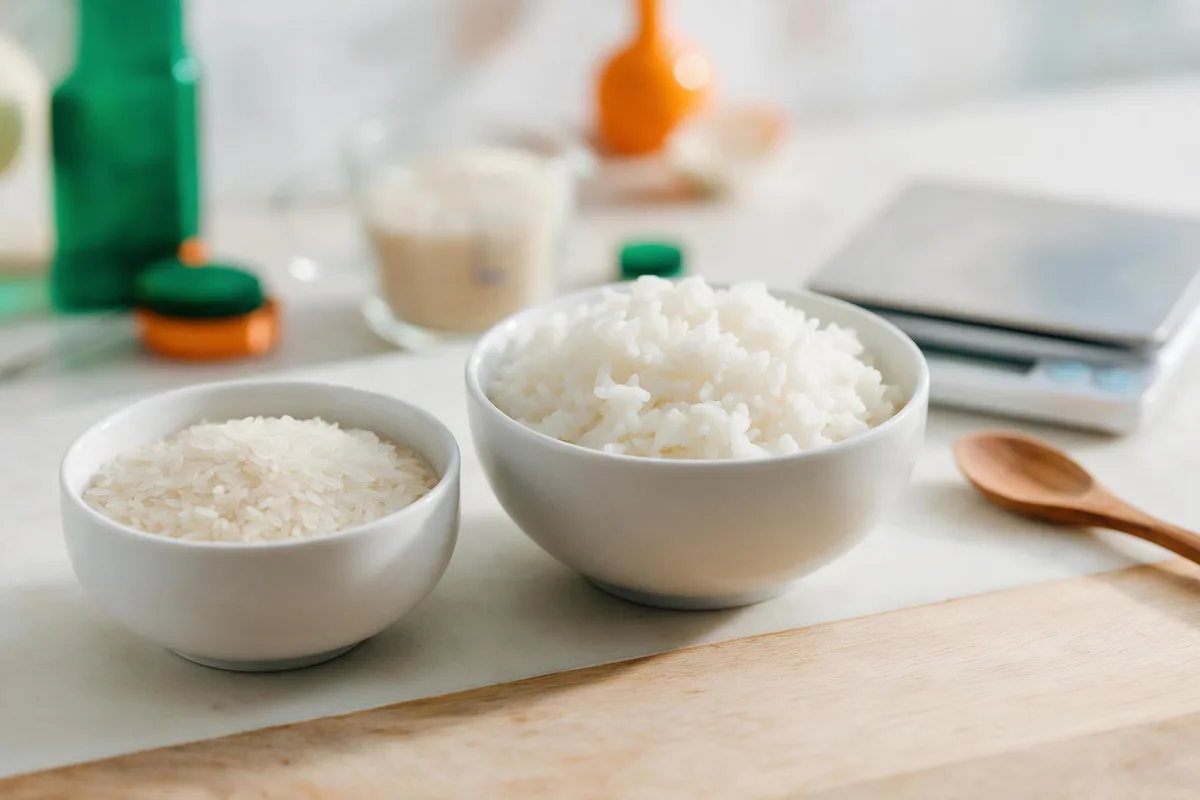 Rice Calories: Cooked vs Uncooked, and the Logging Mistake That Costs Hundreds of CaloriesDry rice has 365 calories per 100 g and cooked rice has 130. Why both are right, how to convert, and how to weigh rice so your log is not out.CalorTracker Team · 8 min read
 Overcoming Diet Plateaus: The Hidden Macros You're MissingHit a wall in your weight loss journey? Discover the sneaky hidden macros and calorie leaks that are sabotaging your progress.CalorTracker Team · 8 min read
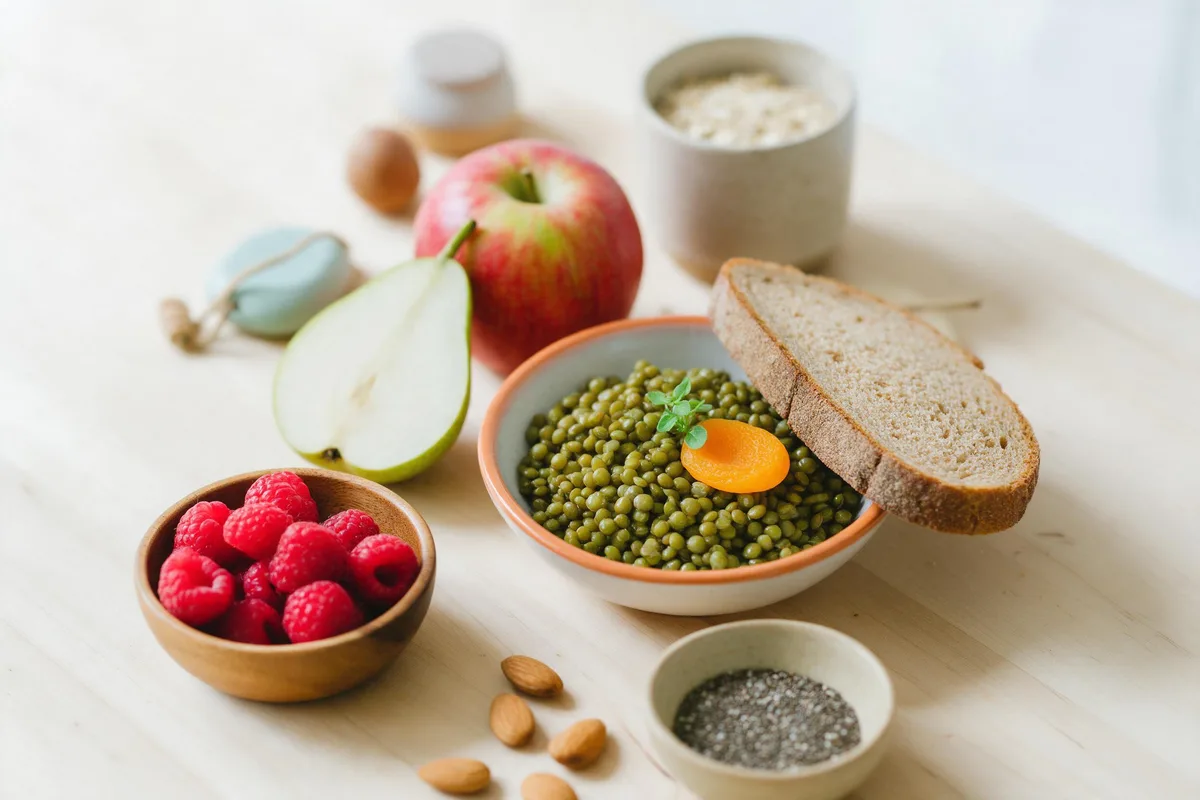 How Much Fiber Per Day? Portions That Add Up to 25 gWhat the WHO says about daily fiber, the fiber in sixteen everyday portions worked out from USDA data, and two sample days that reach 25 g, calories counted.CalorTracker Team · 8 min read

Track what you eat without the typing
Snap a photo, say what you ate or type it, and CalorTracker's AI estimates the calories and macros for you to check. Free to start, no card needed to explore.
Start free on the web