Diet guide
Mediterranean Diet: What It Is and How to Count It
In short
The Mediterranean diet is an eating pattern built on vegetables, fruit, legumes, whole grains, fish, nuts and olive oil, with dairy and poultry in moderation and little red meat or sweets.
By CalorTracker Team. Published .
What the Mediterranean pattern is
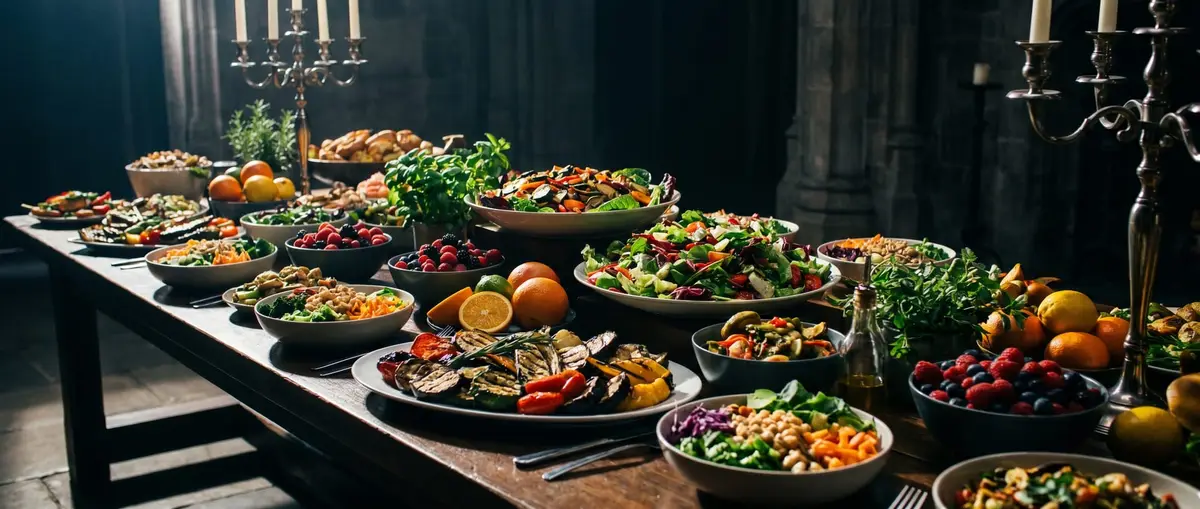
It is less a diet with rules than a description of how people around the Mediterranean traditionally ate: plenty of plant food, olive oil as the main fat, fish more often than meat, and meals shared at a table. The Dietary Guidelines for Americans lists a Mediterranean-style pattern as one of its example eating patterns.
Because it is defined by what the plate mostly holds, not by a macro split, there is no single correct version. A Greek, an Italian and a Moroccan interpretation look quite different, and any of them fits the label.
How it maps to calories and macros
The pattern lands in the middle of the usual macro ranges rather than at an extreme. Carbohydrate comes mostly from vegetables, legumes and grains, fat comes mostly from olive oil, nuts and fish, and protein from fish, beans, dairy and some poultry. Fat is not low, so the calorie count depends heavily on how much oil goes into the pan.
That is the practical lesson for counting it. A tablespoon of olive oil is pure fat, so a salad dressed by eye can carry more calories than the chicken beside it. Weigh the oil once, learn what your usual pour looks like, and use the fat intake calculator to see where it sits against your target.
Eating this way day to day
Beans and lentils do most of the work in the budget-friendly versions of this diet, which is why the legume and fibre lists on this site belong beside it. Fish a couple of times in the week, nuts as snacks, fruit for dessert and wholegrain bread instead of white cover most of the template.
Restaurants serving this cuisine make logging harder, since dishes are built from oil, bread and shared plates. Estimate generously for the oil, and log shared dishes by your own portion.
Foods that fit, per 100 g
These are staples of the pattern. Notice how different the energy density is between the oils and nuts at the top of the calorie column and the vegetables and legumes at the bottom.
| Food | Calories | Protein (g) | Carbs (g) | Fat (g) | Fibre (g) | Note |
|---|---|---|---|---|---|---|
| Olive Oil | 884 | 0 | 0 | 100 | 0 | The pattern's main fat, and the most calorie-dense item on the plate. |
| Chickpeas | 164 | 8.9 | 27.4 | 2.6 | 7.6 | Legumes carry protein and fibre as well as carbohydrate. |
| Sardines (Canned in Oil) | 208 | 24.6 | 0 | 11.5 | 0 | Small oily fish eaten whole, with the bones. |
| Feta Cheese | 265 | 14.2 | 3.9 | 21.5 | 0 | A salty cheese used in small amounts. |
| Tomato | 18 | 0.9 | 3.9 | 0.2 | 1.2 | A base for sauces and salads at very few calories. |
| Whole Wheat Bread | 252 | 12.5 | 42.7 | 3.5 | 6 | The usual grain, in place of refined bread. |
| Walnuts | 654 | 15.2 | 13.7 | 65.2 | 6.7 | A nut snack that is mostly fat by weight. |
| Lentils | 116 | 9 | 20.1 | 0.4 | 7.9 | A daily staple in many Mediterranean kitchens. |
| Cucumber | 15 | 0.7 | 3.6 | 0.1 | 0.5 | Mostly water, so it adds bulk for almost no calories. |
| Hummus | 243 | 7.4 | 14.9 | 17.1 | 5.4 | Chickpeas and oil, so its calories come from both. |
Values are USDA FoodData Central figures for the food as listed, per 100 g. Each food name opens its own page with portions and every nutrient.
Calculators for this way of eating
These run on the same formulas as the rest of the site, so the numbers match what you see in the app.
- Fat Intake CalculatorShows the grams of fat that make up 20 to 35 percent of the calories for your goal, and the saturated fat ceiling inside it.
- Fiber CalculatorWorks out fiber at 14 grams per 1,000 calories for your goal, next to the Adequate Intake for your sex and age.
- Calorie CalculatorTurns your maintenance calories and a goal (lose, maintain or gain) into one daily calorie target, a weekly pace and a per-meal split.
Food lists to browse
Ranked tables of foods by a nutrient, computed from the same USDA data.
Side-by-side food comparisons
Two foods at the same weight, so a swap is one glance.
Read next
Guides from the CalorTracker blog.
Terms used on this page
Short definitions with worked examples.
Safety and who this is not for
Calling a pattern Mediterranean does not make a portion small. Oil, nuts, cheese and bread all add up, and alcohol, which some descriptions include, is not a food to start for health reasons. Fish is also not for everyone, including people with allergies.
This page is general information, not medical advice. If you have a medical condition, take medication, are pregnant or are under eighteen, talk to a doctor or registered dietitian before you change how you eat.
Tracking mediterranean in CalorTracker
- Choose Mediterranean in your dietary preferences so generated meal plans use its foods. Plans need the trial or Premium.
- Log mixed plates by photo and check the estimate, especially the oil, which is the part a photo cannot see.
- Save recipes you cook often and ask Pepperly for a swap that keeps the pattern but changes the calories.
Mediterranean: common questions
Is the Mediterranean diet low-fat?
Do I need to give up red meat?
Sources
- Estruch R, et al. Primary Prevention of Cardiovascular Disease with a Mediterranean Diet Supplemented with Extra-Virgin Olive Oil or Nuts. N Engl J Med. 2018;378(25):e34.
- U.S. Department of Agriculture and U.S. Department of Health and Human Services. Dietary Guidelines for Americans, 2020-2025. 9th Edition. December 2020.
- World Health Organization. Healthy diet (fact sheet).
- Food values: USDA FoodData Central, as described on how we calculate. Every outside source we use is on sources.
Count mediterranean without the arithmetic
Log a meal from a photo, by text or by voice, check the estimate, and watch the day against your own targets. Free to start, no card needed to explore.
Start free on the web